Let It Breathe
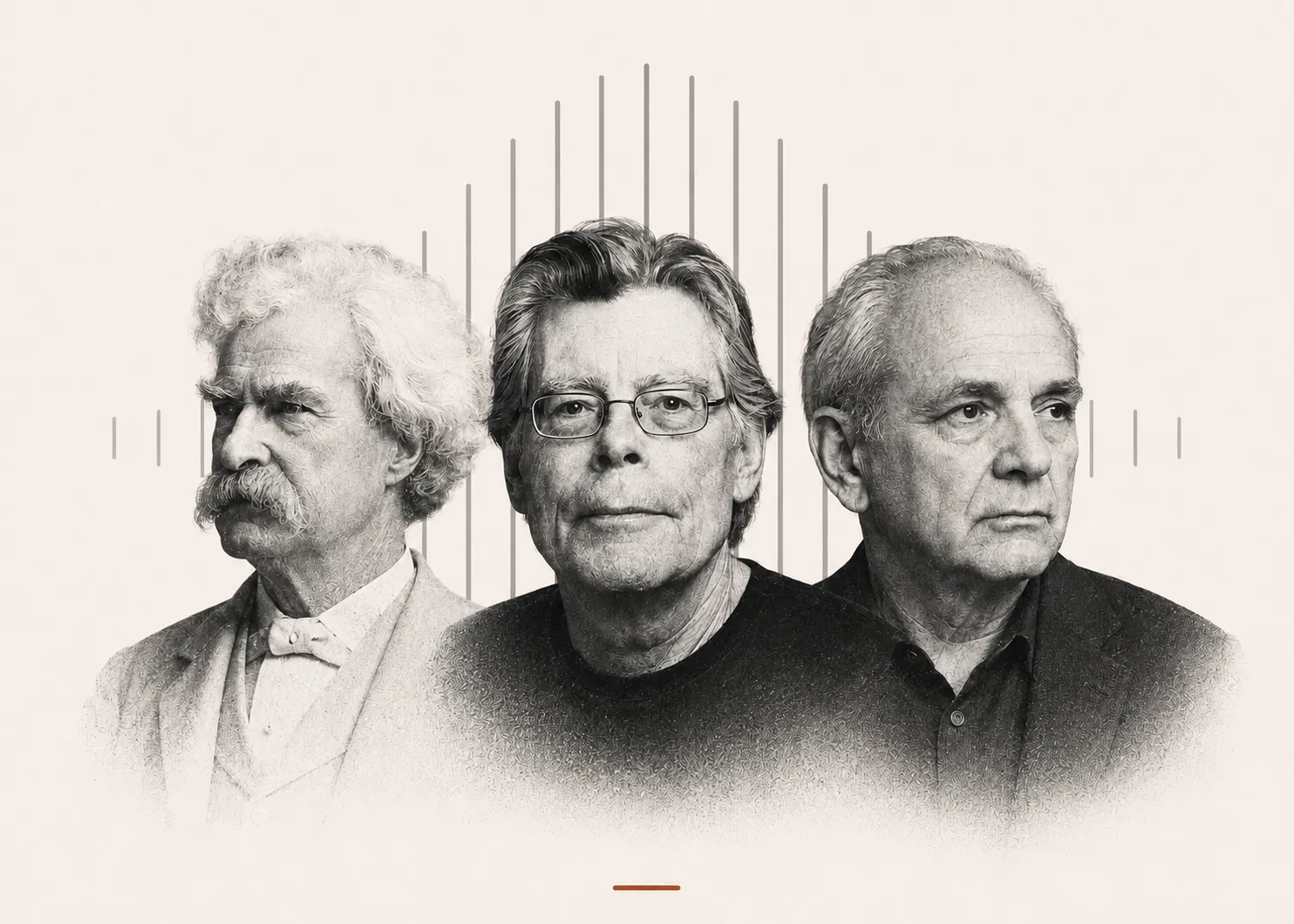
Some of my favorite writers—Stephen King, David Chase, and Mark Twain—share an instinct: distance improves the work.
King gives a finished draft weeks before returning to it. Chase reportedly encouraged The Sopranos writers to dismiss their first five ideas and keep digging. Twain wrote The Adventures of Huckleberry Finn in fits and starts across more than seven years, repeatedly putting the manuscript aside before returning to it.
There are plenty of clichés for this: “sleep on it,” “get a fresh pair of eyes,” “go for a walk.”
They became clichés because the experience is so common.
When you’re deep in the weeds of a project—staring at the same code, paragraph, design, or problem without making meaningful progress—continuing to push can make things worse. Sometimes the productive move is to stop.
Let it breathe.
I’ve come to value this particularly with high-stakes work. Giving an idea some distance helps me return with more clarity, more confidence, and usually a much better plan for executing it.
There is also good evidence for why this works.
It’s As If a Different Person Wrote It
In his Paris Review interview, “Stephen King, The Art of Fiction No. 189,” King describes finishing the first draft of Lisey’s Story and leaving it alone for six weeks.
When he returned, he said, “it seems almost as if a different person wrote it. You’re not quite as wedded to it.”
King isn’t simply resting or having a little break. He is creating temporal distance between himself and the work.
Six weeks is not some universally optimal interval. The right amount of time depends on the work, your temperament, and, less romantically, whether somebody else is paying you to meet a deadline.
But King’s practice gives him three useful things:
- Less attachment. He no longer feels compelled to defend every decision simply because he made it.
- Better error detection. Problems that disappeared into the background during drafting become obvious again.
- A different frame. He can reconsider the work as a reader rather than only as its creator.
Those three benefits describe what I’m looking for when I let something breathe.
The alternative is familiar: I feel rushed, become overly attached to the code and its final appearance, and commit too early to a solution before I properly understand the problem.
Distance loosens that grip.
It’s What Landed Me a Job
I clearly remember the first time this practice paid off early in my career.
I was applying for a new role and completing a timed take-home technical task. I had a few hours to build a full-stack weather application that fetched live data.
Under normal circumstances, I would have found the task fairly trivial. But the pressure of the interview and the realisation of how much I wanted the role changed the way I worked.
Going into the final hour, almost everything was ready. The frontend looked great. The backend worked. I just needed to connect the two.
Then I hit a nasty CORS error.
The frontend and backend refused to communicate, which meant that despite having built both halves of the application, the application itself was broken.
The clock kept moving.
I stopped thinking clearly. I couldn’t get back into a flow state, and every attempt to fix the problem seemed to send me further into the weeds.
With about ten minutes left, I had effectively conceded.
So I threw a Hail Mary.
I emailed the interviewer to ask if I could have another hour the following morning.
To my surprise, they said yes.
I could have spent the rest of the night staring at the same error and falling into delirium. Instead, I closed the laptop and went to bed.
I let it breathe.
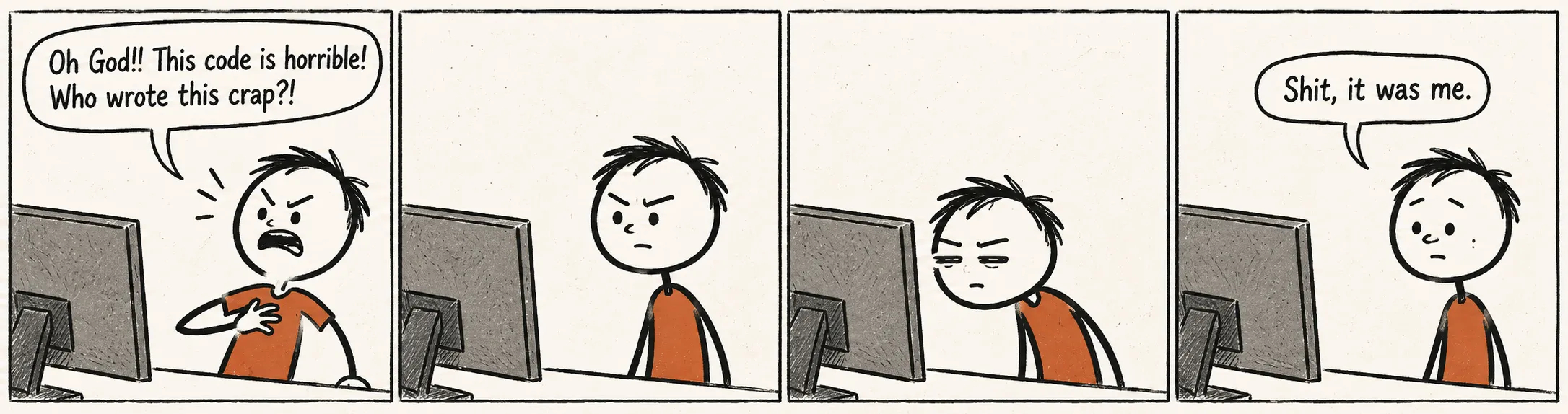
The next morning, I opened the project and looked at the code.
Within five minutes, the problem seemed absurdly obvious. It was as though someone had drawn a massive circle around the offending line and written:
LOOK AT ME. I’M HERE. FIX ME.
I fixed it within minutes and sent the application back.
They offered me the job.
Nothing magical happened overnight. The code had not changed. The problem had not changed.
I had.
What the Science Says
Researchers usually call this kind of break an incubation period: you work seriously on a problem, step away from it, and then return to it.
That sequence matters.
Taking a break before you have properly engaged with a problem is not the same thing. Incubation works on something you have already loaded into your head—an argument you have wrestled with, a bug you have investigated, a draft you have written, or a problem whose obvious solutions have failed.
Research offers several plausible reasons why the break helps.
First, stepping away can weaken fixation. When we spend too long pursuing one approach, that approach can begin to feel inevitable even when it is wrong. Distance makes alternative representations easier to see.
Second, a break reduces fatigue and resets attention. Sometimes the brilliant new perspective is simply the perspective of someone who is no longer exhausted.
Third, low-demand activity can create room for mind-wandering. Walking, showering, cooking, or doing something repetitive gives attention somewhere to go without demanding all of it.
Fourth, sleep can consolidate recently encoded material and, in some circumstances, support later insight. But the research here warrants caution: sleep is not a guaranteed creativity button, and some studies suggest that the incubation interval itself matters more than sleep per se.
Finally, distance changes how we evaluate our own work. This matters enormously in writing. Return to a paragraph tomorrow, and you may immediately see the repetition, missing assumption, weak transition, or sentence that you defended passionately the night before.
The broader incubation literature supports a modest but meaningful benefit. A major meta-analysis found an overall positive effect, although the size of that effect varied by task and by what people did during the break. Creative and divergent-thinking problems tended to benefit more reliably than some insight tasks, while cognitively undemanding activities often worked better than replacing one difficult task with another.
More recent work adds an interesting wrinkle. A 2025 study on creative writing found no evidence that any particular incubation activity universally improved creativity. Instead, people who experienced more mind-wandering during the break tended to improve more when they returned to the same writing problem.
That distinction matters.
The lesson is not simply:
Take a break and become more creative.
It is closer to:
Do meaningful work, create some distance, give your attention room to loosen, then come back and look again.
The Framework
Based on my experience in my day job and what I found in the research, I’ve started using the following framework:
- Seed the problem. Write the thesis, scene, outline, argument, rough draft, or failing implementation. Record the unresolved question before you leave.
- Stop at a useful point. Step away after meaningful effort, ideally once you understand the shape of the problem but before you descend into compulsive tweaking.
- Choose a low-demand break. Walk, shower, cook, tidy, exercise lightly, or rest. Don’t automatically replace one cognitively demanding problem with another.
- Protect the cue. Leave yourself one sentence before stopping: “When I return, test whether the central claim is actually supported,” or “Check why this request fails before it reaches the handler.” This gives your future self somewhere to begin.
- Change the conditions when you return. Move rooms. Change the time of day. Print the draft. Change the font. Read it aloud. Anything that makes the work feel slightly unfamiliar can help you see it again.
- Evaluate globally before locally. Before polishing individual sentences or lines of code, ask: What would a stranger misunderstand? Where does the energy drop? What assumption am I making? What am I missing?
- Use sleep deliberately. If you’re exhausted, stop. For difficult conceptual work, a full night after genuine effort makes more sense than trying to manufacture insight at 1 a.m.
- Keep a short log. Track the task, how long you stepped away, what you did during the break, and what changed when you returned. The research shows enough individual and task-level variation that personal calibration matters.
The important part is not the exact interval.
Stephen King might need six weeks. I needed one night to see a CORS error that had become invisible five hours earlier. Sometimes twenty minutes around the block is enough.
The principle is the same.
Good work does not always come from pushing harder against the problem.
Sometimes you need to do the work, walk away, and give yourself enough distance to see it properly.
Let it breathe.
Originally published on Think Technically.